Tile Roofing
Preserve the visible roof style when the system under it is done.
Many Arizona roofs keep usable tile while the underlayment beneath it is the real failure point. That requires a scope built around reset and restoration.
Replacement becomes the cleaner decision when the assembly is broadly worn, leak patterns repeat, underlayment has failed across large areas, or the roof is simply near the end of its service window.
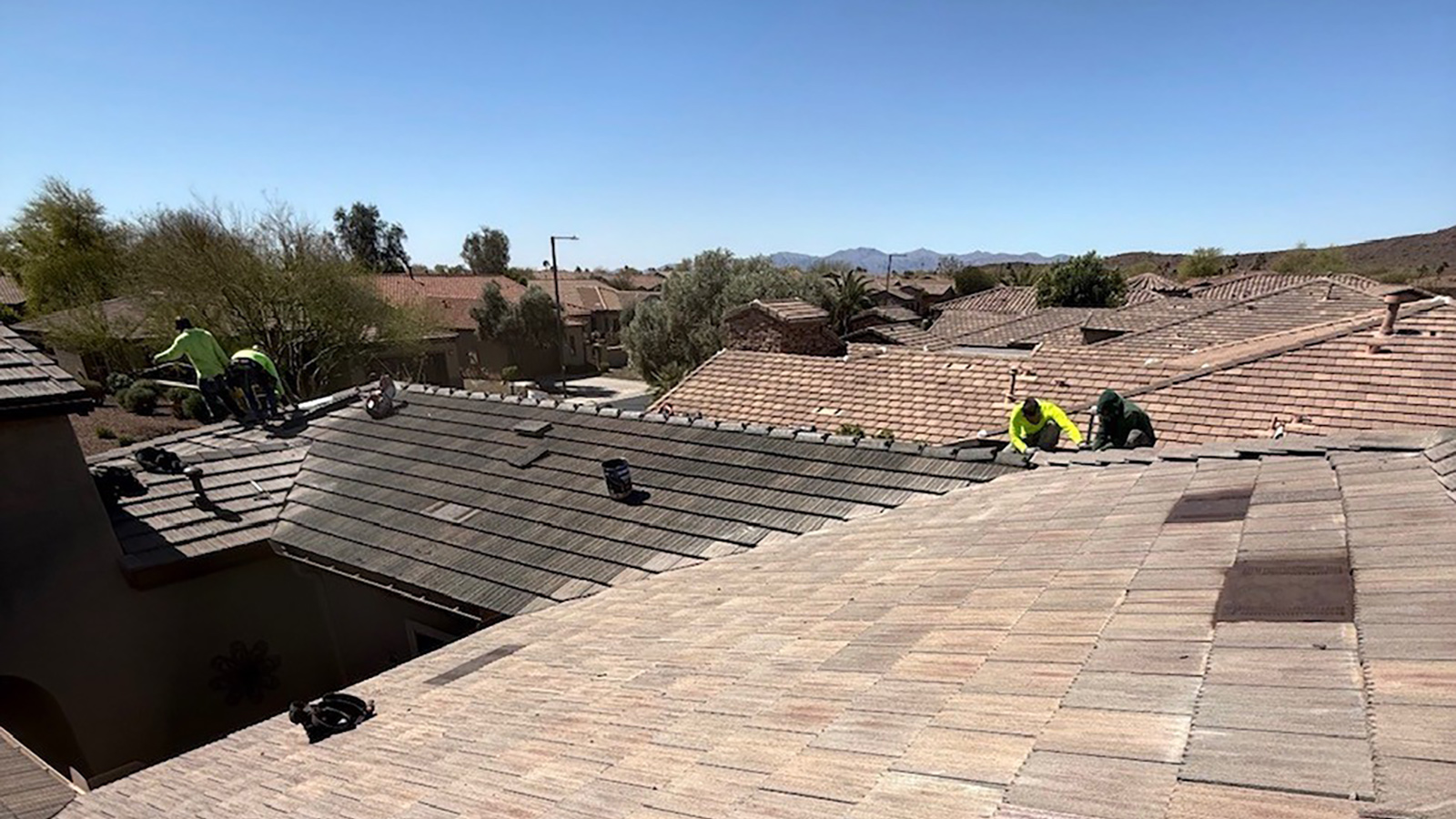
Many Arizona roofs keep usable tile while the underlayment beneath it is the real failure point. That requires a scope built around reset and restoration.
Shingle replacement works well when the roof needs a full reset and the homeowner wants a straightforward schedule and finish.
Low-slope work demands different drainage and insulation logic than pitched residential systems, so it lives on a separate path here.
That timing depends on square footage, weather, roof complexity, structural surprises, and material selection, but it remains a useful expectation-setting point carried over from the current site.
That includes not just price, but also material fit, schedule, deck condition risks, tear-off scope, and cleanup expectations.
Confirm why the existing system is no longer a good repair candidate.
Match the roof type to tile, shingle, or low-slope requirements.
Define work sequencing, access, cleanup, and project rhythm before the build begins.
Finish with punch review, site cleanup, and a clear handoff.
If the roof is near the edge already, the estimate should make that tradeoff explicit instead of hiding it.